Cyclic Phosphorylation 11th biology Biology Diagrams Protein phosphorylation is also involved in the global control of DNA replication during the cell cycle, as well as in the mechanisms that cope with stress-induced replication blocks. Similar to eukaryotes, bacteria use Hanks-type kinases and phosphatases for signal transduction, and protein phosphorylation is involved in numerous cellular We provide information regarding the phosphorylation events over the cell cycle, and a method of comparing these to protein and transcript level dynamics. Besides the post-translational regulation of protein activity, the intracellular localization plays a major role and the compartmentalization of the cell serves as a well-recognized way to Phosphorylation of about 75% of the protein kinases they identified was upregulated more than twofold in M phase, suggesting that cell-cycle progression involves extensive rearrangements of

Cell-cycle phosphorylation is temporally ordered, at least in part, through the sequential expression of different cyclins. Recent studies by Swaffer et al. and Godfrey et al. show that intrinsic properties of the substrate proteins contribute as well: good kinase substrates tend to be phosphorylated early, and good phosphatase substrates tend to be phosphorylated late.
Role of Protein Phosphorylation in the Regulation of Cell Cycle and DNA ... Biology Diagrams
Since phosphorylation events both depend on the structural environment and influence its properties, protein structure and phosphorylation should be considered interrelated and mutually dependent. The variation of phosphorylation changes over the cell cycle scales with the structural propensities of the phosphorylated residues: from lowest
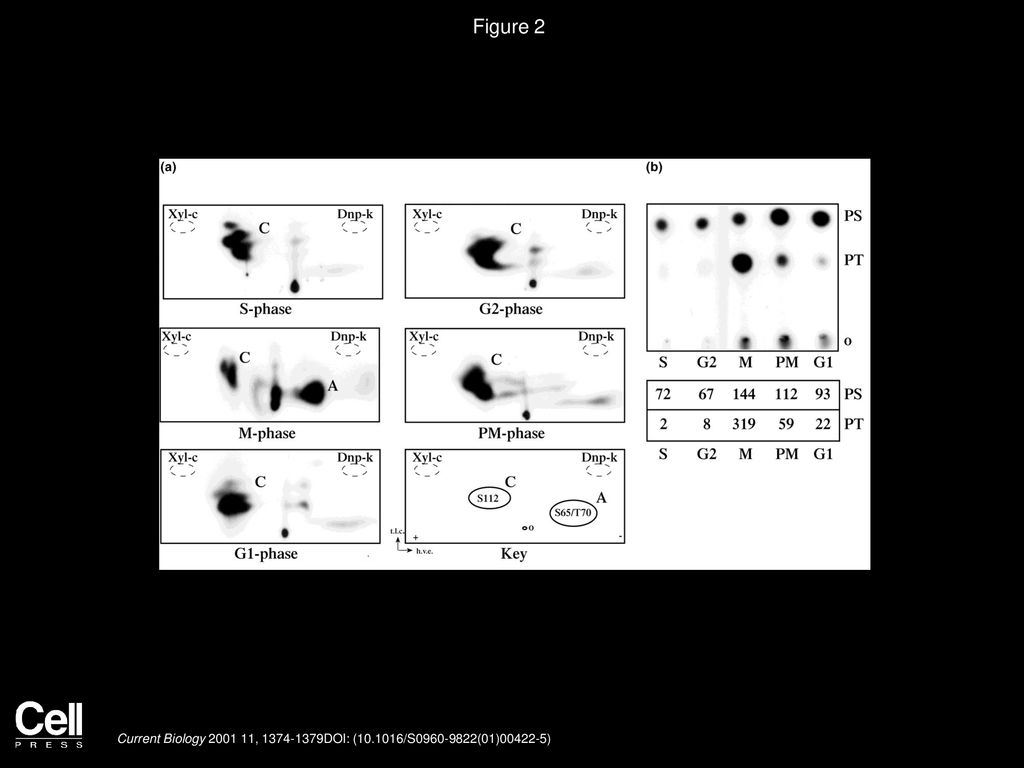
The cell cycle is a highly conserved process involving the coordinated separation of a single cell into two daughter cells. To relate transcriptional regulation across the cell cycle with oscillatory changes in protein abundance and activity, we carried out a proteome- and phospho-proteome-wide mass spectrometry profiling. The cell cycle governs a precise series of molecular events, regulated by coordinated changes in protein and phosphorylation abundance, that culminates in the generation of two daughter cells. In both, the phosphorylation is a predominant event and plays an important role in cell survival (AKT activation phosphorylates BAD and MDM2), cell proliferation (AKT activation phosphorylates FoxO, RAS phosphorylates RAF and it phosphorylates MEK that phosphorylates Erk1/2), cell migration (phosphorylation cascade of RAS), apoptosis (AKT